
Children learn in many different ways, but play is one of the most natural and effective ways for them to understand the world around them. When children play, they are not simply passing time. They are practicing communication, exploring ideas, solving problems, developing physical skills, and learning to interact with others. Play gives children the freedom to experiment, make mistakes, and try again without feeling pressured.
The idea of playing lessons fparentips can be understood as using everyday play as an opportunity for learning and positive parenting. Instead of separating education and fun, parents can combine the two. A simple game, drawing activity, building project, or outdoor adventure can teach valuable skills while keeping children interested and engaged.
This approach does not require expensive toys or complicated lesson plans. What matters most is creating opportunities for children to explore and giving them supportive guidance along the way.
Why Learning Through Play Matters
Play supports several important areas of childhood development. During imaginative games, children develop language and social skills. Building with blocks can introduce basic concepts related to shapes, balance, and problem-solving. Outdoor games encourage movement and help children develop coordination.
Play also gives children opportunities to make decisions. They may decide which game to play, how to build something, or what role to take in an imaginary story. These small choices help them become more confident and independent.
Another important benefit is emotional development. Children often use pretend play to express feelings and explore situations they may not fully understand. A child playing with dolls, for example, might recreate a situation from school or home. Parents can observe these activities and gently support the child’s understanding.
Creating Educational Play at Home
Parents do not need to turn the home into a classroom. Learning can happen naturally during ordinary activities.
For younger children, sorting household objects can become a lesson about colors, sizes, and shapes. Counting toys can introduce basic mathematics. Reading a story together can develop vocabulary and listening skills. Cooking can provide opportunities to discuss measurements, ingredients, and changes in texture.
The key is to keep activities simple. Children can lose interest when an activity feels too structured or difficult. Give them enough freedom to explore while offering guidance when needed.
For example, instead of telling a child exactly how to construct a tower from blocks, a parent might ask, “How can we make it taller without making it fall?” This question encourages the child to think about balance and experiment with different solutions.
Choosing the Right Activities
The best activities are usually those that match a child’s age, interests, and abilities. A child who enjoys animals may be more interested in a nature walk than in a worksheet. A child who loves drawing may enjoy creating pictures based on a story.
Parents should also consider the child’s energy level. Active children may benefit from games involving running, jumping, or throwing. Children who prefer quiet activities might enjoy puzzles, books, drawing, or building.
It is also helpful to provide a mixture of activities. Physical play supports coordination and fitness, while creative activities encourage imagination. Games involving other people can develop communication and cooperation.
There is no single activity that teaches everything. A balanced approach gives children different ways to practice important skills.
Encouraging Creativity
Creativity is an important part of childhood learning. Open-ended play allows children to create their own ideas instead of simply following instructions.
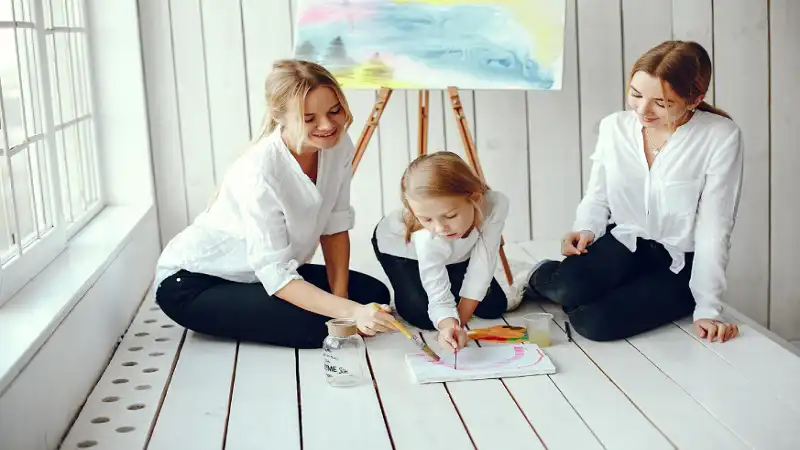
Art supplies are a good example. Rather than asking a child to copy a specific picture, parents can provide paper, crayons, paint, or recycled materials and let the child decide what to make. The result does not need to be perfect.
Pretend play is another powerful creative activity. Children can turn a box into a house, a blanket into a tent, or a collection of toys into a small imaginary community. These games encourage storytelling and help children practice different social roles.
Parents can participate without controlling the activity. Asking questions such as “What happens next?” or “Who lives there?” can encourage children to expand their stories.
Making Play Interactive
Children often learn more effectively when adults participate in their activities. This does not mean parents must spend every minute directing play. Even a short period of focused attention can be valuable.
During playing lessons fparentips, parents can join a child’s game and follow the child’s ideas. If the child is building a city with blocks, the parent might ask about the buildings or suggest creating roads between them. If the child is playing a board game, the parent can discuss counting, turn-taking, and following rules.
Interactive play also strengthens the relationship between parents and children. Children learn that their ideas and interests matter. This can create a stronger sense of trust and connection.
Using Everyday Situations as Lessons
Learning does not have to happen only during planned activities. Everyday experiences provide countless teaching opportunities.
A trip to a grocery store can become a lesson about numbers, colors, categories, and decision-making. A walk outside can lead to conversations about plants, animals, weather, and the environment. Cleaning a room can teach children about organization and responsibility.
Parents can also encourage children to participate in simple household tasks. Measuring ingredients, matching socks, watering plants, or organizing toys can all develop useful abilities.
These experiences are especially valuable because children can immediately see how their learning applies to real life.
The Role of Questions
Questions can turn ordinary play into a deeper learning experience. However, parents should avoid asking too many questions in a way that makes play feel like a test.
Open-ended questions are particularly useful. Instead of asking only questions with one correct answer, try questions that encourage children to explain their thinking.
Examples include:
- “What do you think will happen?”
- “How could we solve this?”
- “Why do you think that happened?”
- “What would happen if we changed it?”
- “Can you think of another way?”
These questions encourage curiosity and reasoning. They also help parents understand how their children think.
Learning Through Mistakes
Mistakes are an important part of learning. Parents may sometimes want to step in immediately when a child struggles, but allowing children to experience small challenges can help them develop persistence.
If a puzzle does not work, for example, encourage the child to try another piece or approach. If a block tower falls, help the child think about why it happened rather than simply rebuilding it for them.
This teaches children that failure does not necessarily mean they cannot succeed. Instead, it can be part of the process of finding a better solution.
Parents should provide support without taking over. A little encouragement can make a difficult activity feel manageable.
Balancing Structure and Freedom
Some structure is helpful, but children also need freedom. Too many rules can make play feel like another school assignment.
A good balance is to establish basic boundaries while allowing children to make choices. Parents might decide when play begins and ends, while letting the child choose between several activities.
For example, a parent could say, “We have thirty minutes before dinner. Would you like to build something, draw, or play outside?” The child receives structure while still having control over the activity.
This balance can support independence and make children more willing to participate.
Avoiding Pressure
One of the most important principles of play-based learning is keeping the experience enjoyable. Children do not need to turn every game into an academic exercise.
If a child is enjoying building blocks, there is no need to constantly introduce counting or spelling. Learning can happen naturally through the activity. Parents should follow the child’s interests and introduce educational ideas when they fit comfortably.
Pressure can reduce motivation. Encouragement, curiosity, and positive attention are usually more effective than criticism or unrealistic expectations.
Simple Play Ideas for Different Ages
Toddlers can benefit from activities such as stacking blocks, sorting objects, singing songs, looking at picture books, and exploring safe household items.
Preschool children may enjoy pretend shops, simple puzzles, drawing, water play, memory games, and nature walks.
School-age children can explore more complex board games, building projects, science experiments, storytelling, cooking, gardening, and outdoor challenges.
The exact activity matters less than the opportunity to explore, communicate, and think.
Building a Positive Parenting Routine
A successful play routine does not need to be long. Even 15 to 30 minutes of focused play can be meaningful when parents are present and engaged.
Families can create regular opportunities for play by choosing a convenient time each day or several times each week. The routine can remain flexible so that children can rest when they are tired or change activities when their interests shift.
Playing lessons fparentips works best when it becomes a natural part of family life rather than another responsibility that parents feel they must complete perfectly.
Final Thoughts
Play is much more than entertainment. It provides children with opportunities to explore, communicate, create, solve problems, develop physical abilities, and understand emotions. Parents can support this learning by offering simple activities, asking thoughtful questions, allowing children to make choices, and giving them space to experiment.