
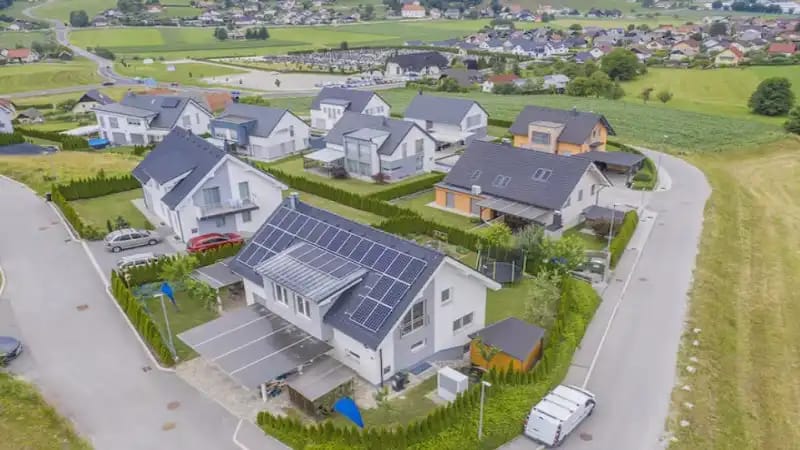
For decades, solar panels meant one thing: chunky blue rectangles that screamed “eco-warrior” from your rooftop. Homeowners who cared about kerb appeal avoided them entirely, no matter how much money they could save. That era is over. Modern solar technology has evolved into sleek, design-forward products that complement contemporary architecture rather than competing with it.
Today’s solar panels integrate seamlessly into home design. Whether you’re renovating a Victorian terrace or building a minimalist new-build, there are solar options that enhance rather than detract from your home’s aesthetic. Companies like Solar Panels Leeds specialise in helping homeowners choose systems that complement their architectural vision. Understanding these design possibilities transforms solar from a necessary compromise into an intentional design choice.
The All-Black Revolution
The most significant aesthetic leap in solar technology came with all-black monocrystalline panels. Unlike traditional blue polycrystalline panels with visible grid lines and silver frames, these feature uniform black surfaces that blend naturally with modern rooflines.
The difference is striking. All-black panels create clean, monochromatic roofscapes that look intentional rather than utilitarian. On dark slate or tile roofs, they virtually disappear. On modern flat-roof extensions or contemporary builds with dark cladding, they read as architectural features rather than afterthoughts.
Frame color matters too. Black frames eliminate the silver border that traditionally outlined each panel, creating a continuous surface area that looks more like roofing material than equipment. This detail transforms a solar installation from obviously functional to subtly integrated.
Solar Tiles: When Panels Become Roofing
For homeowners who want solar energy without visible panels, solar tiles offer a revolutionary alternative. These products replace traditional roofing materials entirely, functioning simultaneously as weatherproofing and electricity generation.
Solar tiles look like premium roofing. From street level, they’re indistinguishable from high-end slate or composite tiles. The photovoltaic technology sits beneath a protective surface that mimics natural materials.
Rather than mounting panels over existing roofing, solar tiles become the roof itself. This works particularly well during roof replacement. Conservation areas and listed buildings often approve solar tiles where traditional panels would be rejected.
Integrated Systems for New Builds
New construction offers solar integration opportunities that renovations can’t match. Architects designing modern homes increasingly specify solar from the outset, incorporating panels into building orientation, roof pitch, and overall aesthetic.
Building-integrated photovoltaics go beyond roof-mounted panels. Solar canopies over patios extend living space while generating electricity. Solar pergolas create shaded outdoor areas that produce power. These integrated approaches treat solar as architectural elements rather than add-ons.
Placement Strategies for Visual Impact
Strategic placement minimizes visual impact while maximizing generation. Rear-facing roof slopes generate substantial electricity while remaining invisible from the street. Side elevations on detached properties offer similar benefits, keeping panels away from primary viewpoints.
Multiple smaller arrays across different roof sections often look better than one large installation. This approach distributes panels more evenly, avoiding the “one massive block” appearance that traditional installations create.
Ground-mounted systems work beautifully in rural properties with land. Positioned away from the house in garden areas, they generate power without affecting the building’s appearance at all.
Matching Panels to Architecture
Contemporary homes with clean lines and minimalist design naturally complement modern solar panels. The geometric precision of panel arrays echoes the architectural language. Dark facades and flat roof sections provide ideal backgrounds for all-black installations.
Period properties require more careful consideration. Solar tiles maintain character better than panels. When panels are necessary, positioning them on less visible elevations preserves street-facing aesthetics. Experienced installers ensure placement decisions balance generation efficiency with visual integration.
Color and Finish Options
Beyond all-black panels, manufacturers now offer varied aesthetic options. Some panels feature subtle textures that reduce glare. Others incorporate colored backing sheets visible between cells, allowing limited customization while maintaining efficiency.
Frame finishes extend beyond standard black and silver. Manufacturers produce panels with frames matching popular architectural metal finishes, coordinating with window frames and guttering.
The Design-First Mindset
The fundamental shift in solar aesthetics is treating installations as design decisions rather than purely functional ones. Homeowners now ask, “How will this look?” alongside “How much will this generate?” This mindset produces better outcomes, creating homes that are both beautiful and efficient.
Solar technology will continue improving aesthetically. Transparent solar glass, colored panels, and fully integrated building materials represent the next generation of solar design. The trend is clear: solar is becoming architecture rather than equipment bolted to architecture.
For homeowners who’ve delayed solar because of aesthetic concerns, the technology has caught up with your standards. Modern solar installations enhance property value, reduce energy costs, and look genuinely good doing it.
See more homelifestylehub